
What is Testosterone and Its Role?
Testosterone is the primary male sex hormone, produced mainly in the testes and, to a lesser extent, in the adrenal glands. It is responsible for the development and maintenance of male reproductive organs, the growth of muscle mass and strength, the distribution of body fat, the growth of hair on the body and face, and the deepening of the voice.
Beyond its physical effects, testosterone also influences libido, mood, energy levels, motivation, and cognitive functions. In men, optimal levels of testosterone ensure normal sexual health, maintain bone density, and support the cardiovascular system, while low testosterone can lead to reduced strength, fatigue, low mood, decreased sexual desire, and increased body fat. Men experiencing these issues often look for ways to increase testosterone naturally or under medical guidance.
Overall, testosterone is a key hormone that determines not only physical health but also the psycho-emotional well-being of men.
Symptoms of Low Testosterone in Men
Low testosterone is a common condition that can affect men at various stages of life, yet it often goes unnoticed in its early stages. Understanding low testosterone symptoms in men is essential for identifying a potential hormonal imbalance and taking timely action.
One of the most common signs is a persistent lack of energy. Men with reduced testosterone levels often experience ongoing fatigue, even after proper rest. This may also be accompanied by reduced motivation, difficulty concentrating, and a general sense of low mental drive.
Another key symptom is a decline in sexual health. There is a clear link between low libido and low testosterone, which may present as reduced sexual desire, fewer spontaneous erections, or difficulty maintaining performance. While occasional changes are normal, persistent issues may indicate an underlying hormonal problem.
Physical changes are also common. Men may notice a gradual loss of muscle mass and strength, along with an increase in body fat, particularly around the abdomen. These changes are often associated with low testosterone causes such as ageing, chronic stress, poor sleep, or underlying health conditions.
Mood-related symptoms should not be overlooked. Irritability, low mood, or even mild depression can be linked to low testosterone, as the hormone plays an important role in emotional balance and overall well-being.
Common symptoms include:
- Persistent fatigue and low energy levels
- Reduced libido and sexual performance issues
- Loss of muscle mass and increased body fat
- Mood changes, including irritability or low mood
- Difficulty concentrating and reduced mental clarity
- Poor sleep quality
- Decreased motivation and confidence
In summary, recognising the early signs of low testosterone can help prevent more serious health concerns. If several of these symptoms are present, it may be advisable to check hormone levels and address lifestyle factors that influence hormonal balance.
Why Testosterone Declines with Age
It’s completely normal for testosterone to decrease as men get older. In fact, from around the age of 30, testosterone levels begin to decline gradually each year. This isn’t something that happens overnight, but over time the changes can become more noticeable.
One of the main reasons is simply how the body ages. The cells in the testes that produce testosterone become less efficient, and the signals from the brain that regulate hormone production aren’t as strong as they once were. As a result, the body produces less of the hormone, which is one of the most common low testosterone causes linked to ageing.
At the same time, levels of a protein called SHBG increase. This protein binds to testosterone in the bloodstream, meaning there’s less “free” testosterone available for the body to actually use. So even if total levels don’t drop dramatically, the active hormone can still be lower, contributing to low testosterone over time.
Lifestyle also plays a big part. As men age, they often become less physically active, may gain weight, and experience poorer sleep or higher stress levels. Excess body fat, particularly around the abdomen, can convert testosterone into oestrogen, which further lowers hormone balance. These factors don’t just explain the decline — they can also worsen low testosterone symptoms in men, such as fatigue, reduced libido, and low motivation.
The good news is that while ageing can’t be stopped, many of these changes can be managed. Regular exercise, proper sleep, and a balanced diet can all help support hormone health and even help increase testosterone naturally.
In short, a gradual decline in testosterone is a normal part of ageing, but how strongly it affects you often depends on your overall health and lifestyle.
Ways to Increase Testosterone Naturally
If you’re dealing with low testosterone, the good news is that there are several practical and natural ways to support your hormone health. While ageing plays a role, your daily habits have a significant impact on your testosterone levels.
One of the most effective approaches is regular physical activity. Strength training, in particular, has been shown to increase testosterone, especially when combined with proper recovery. You don’t need to train excessively — consistency matters far more than intensity.
Sleep is another crucial factor that is often overlooked. Poor sleep can quickly lower hormone production, and over time this may contribute to low testosterone symptoms in men such as fatigue, low mood, and reduced motivation. Aiming for 7–9 hours of quality sleep each night can make a noticeable difference.
Diet also plays an important role. A balanced intake of protein, healthy fats, and essential micronutrients like zinc and vitamin D supports overall hormone function. These are considered some of the most reliable natural ways to boost testosterone without relying on medication.
Managing stress is equally important. Long-term stress raises cortisol levels, which can interfere with testosterone production. Finding simple ways to unwind — whether that’s exercise, time outdoors, or proper rest — can help keep hormones in better balance.
Finally, maintaining a healthy body weight is key. Excess body fat, particularly around the abdomen, is strongly linked to low testosterone, as it can disrupt the body’s hormonal equilibrium.
In short, while there’s no instant fix, consistent lifestyle changes can significantly improve how your body produces and uses testosterone over time.
| Method | How It Supports Testosterone | Practical Advice |
|---|---|---|
| Strength Training | Encourages natural testosterone production | Train 3–4 times weekly focusing on compound lifts |
| Quality Sleep | Regulates hormonal balance | Aim for 7–9 hours per night |
| Balanced Diet | Provides essential nutrients for hormone production | Include healthy fats: eggs, meat, nuts, olive oil |
| Vitamin D | Supports healthy testosterone levels | Get regular sunlight or consider supplements |
| Healthy Weight | Reduces excess oestrogen linked to body fat | Maintain a healthy body composition |
| Stress Management | Lowers cortisol, which can suppress testosterone | Try walking, rest, or mindfulness |
| Limit Alcohol | Helps maintain hormonal balance | Avoid frequent or excessive intake |
Which Tests to Take to Check Your Testosterone Levels
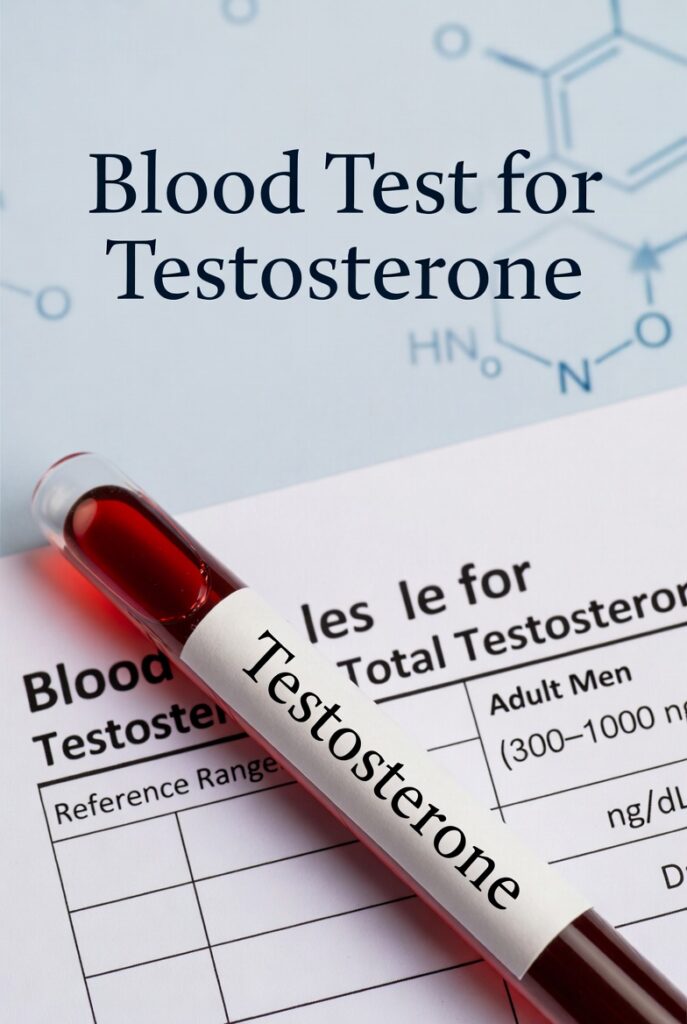
To accurately assess your testosterone levels, a blood test is essential. These tests can help identify low testosterone and related issues such as fatigue, low libido, reduced muscle mass, or fertility concerns. In the US, the most common and reliable tests include:
- Total Testosterone – measures all testosterone in the blood, including bound and free forms. This is the standard initial test.
- Free Testosterone – shows the portion of testosterone available for the body to use, not bound to proteins.
- Bioavailable Testosterone – combines free and loosely bound testosterone for a clearer picture of active hormone levels.
- Sex Hormone‑Binding Globulin (SHBG) – helps interpret testosterone results more accurately.
- Luteinising Hormone (LH) and Follicle‑Stimulating Hormone (FSH) – indicate how well your body signals testosterone production.
- Additional Hormone Panels – sometimes include oestradiol or prolactin if imbalances are suspected.
Tips for accurate testing:
- Test in the morning, preferably before 10 a.m., when hormone levels peak.
- Avoid relying solely on at‑home kits; professional lab tests are more accurate.
- Discuss results with a healthcare provider to interpret them in the context of age, symptoms, and medical history.
Normal Testosterone Levels: Reference Ranges for Adults
Understanding your testosterone levels is an important part of assessing overall health. Blood tests can measure your total testosterone, helping identify whether your hormone levels are within the expected range. Keep in mind that “normal” values can vary slightly depending on the laboratory and the testing method, so results should always be interpreted by a healthcare professional.
| Parameter | Typical Normal Range (Adults) | Units |
|---|---|---|
| Total Testosterone (men) | 300 – 1,000 | ng/dL |
| Total Testosterone (women) | 15 – 70 | ng/dL |
| Notes: Normal ranges may vary slightly between laboratories and methods; interpretation should be done by a healthcare provider. | — | |
Official reference: MedlinePlus – Testosterone Test
If you notice signs of low testosterone or wish to check your levels due to ageing, consult your healthcare provider after receiving the results. Only a doctor can determine an individual treatment plan based on your specific clinical situation. Self-treatment is not recommended, as it may worsen the condition.
Frequently Asked Questions (FAQ)
Q1: What are the normal testosterone levels in men and women?
A: Normal testosterone levels vary by age and sex. For adult men, typical total testosterone ranges from 300–1,000 ng/dL, while for adult women it is 15–70 ng/dL. Levels outside these ranges may indicate low or high testosterone. Always consult a healthcare professional for interpretation.
Q2: How can I test my testosterone levels?
A: Testosterone levels are checked through a blood test, usually in the morning when hormone levels peak. Common tests include total testosterone, free testosterone, and bioavailable testosterone. At-home kits exist, but lab tests are more accurate.
Q3: What are the signs of low testosterone?
A: Symptoms of low testosterone may include fatigue, low libido, reduced muscle mass, mood changes, and fertility issues. If you experience these, ask your doctor for a proper evaluation.
Q4: Can I treat low testosterone myself?
A: Self-treatment is not recommended. Only a doctor can create an individual treatment plan based on your clinical picture. Improper use of supplements or hormones can worsen your condition.
Q5: Are testosterone tests covered by insurance in the USA?
A: Many insurance plans cover testosterone testing if there are clinical indications, such as symptoms of low testosterone or related endocrine concerns. Check with your provider for specifics.
If you notice symptoms of low testosterone or want to check your hormone levels, consult your healthcare provider. Only a doctor can recommend the right approach for you.
Related Articles
-
Sildenafil – are they the best tablets for erectile dysfunction (ED)?
Article Overview Erectile dysfunction is not always caused by age-related changes. Often, the cause lies in low testosterone levels or psychological factors. The modern pharmaceutical market offers a wide range of medications that help improve erections. In this article, we will discuss the main causes of erectile dysfunction, when it is necessary to take tablets,…
-
The Best Erectile Dysfunction Pills: How to Choose?
The best erectile dysfunction tablets help improve the functioning of the male reproductive system. Under these conditions, they enhance erectile function, making it sufficient for sexual intercourse. After taking such medications, blood flow to the penis improves, which helps to achieve and maintain a firm erection during sexual arousal. There is a wide range of…
Pingback: 10 Best Foods To Naturally Increase Testosterone and Boost Your Energy - testosteron42.com